


Casino games are often seen as games of chance, where luck dictates the outcome. While that might be true for many games on the casino floor, blackjack is different. Unlike roulette or slot machines, blackjack allows players to influence their odds through strategy and mathematics. The game is a delicate balance of probability, statistics, and strategic decision-making. Those who understand the mathematical principles behind blackjack can significantly improve their chances of winning, even in the face of the casino’s inherent advantage.
Probability in Blackjack
At its core, blackjack is a numbers game. Unlike poker, which involves reading opponents, or roulette, which is purely random, blackjack rewards players who can apply probability and logic to their decisions. The game is played with a standard deck (or multiple decks), and each card that is dealt alters the probabilities of what will come next.
Since the objective is to get as close to 21 as possible without going over, every decision should be based on probability rather than gut instinct. The dealer must follow strict rules—typically hitting on 16 and standing on 17—which gives players an opportunity to use math to predict likely outcomes. By understanding probability, players can make statistically favorable decisions, maximizing their chances of success over time.
The House Edge and How to Reduce It
Every casino game has a built-in house edge, ensuring that, in the long run, the casino always profits. In blackjack, this edge typically sits around 2% for an average player. However, by using optimal strategies, the house edge can be reduced to as low as 0.5%—making blackjack one of the best games in the casino for skilled players.
The house edge exists because players must act before the dealer, meaning they can bust before the dealer even plays their hand. However, by following mathematically sound strategies, players can significantly mitigate this disadvantage. The key is knowing when to hit, stand, split, or double down based on probability rather than emotion.
The Foundation of Winning
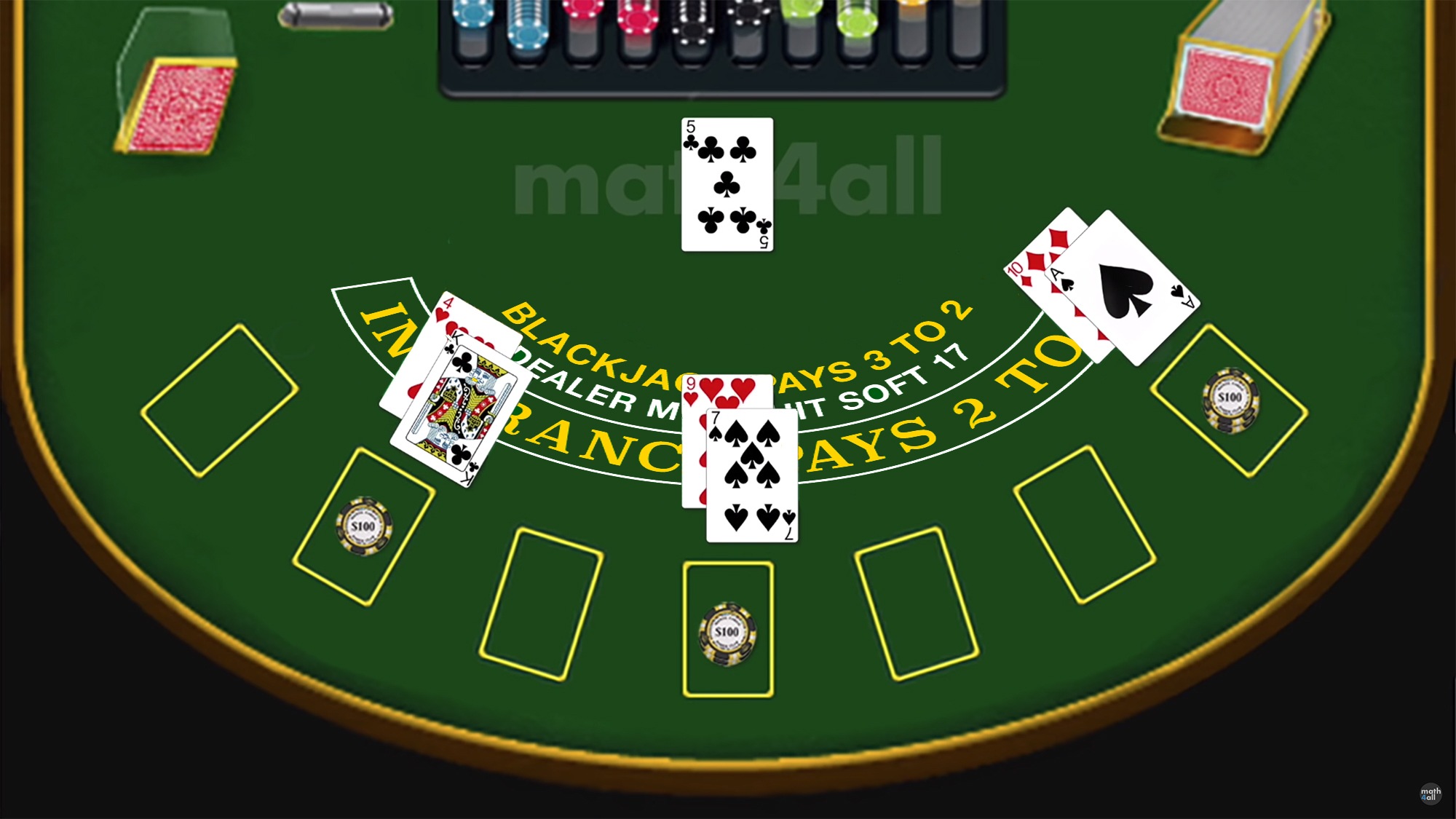
Basic strategy is the backbone of successful blackjack play. It is a mathematically proven system that dictates the best move in every possible situation. This strategy is based on millions of computer simulations that analyze the statistical likelihood of every possible hand combination.
For example, if a player has a hard 16 (a hand without an Ace valued at 1 or 11) and the dealer’s upcard is a 7 or higher, the correct mathematical move is to hit. The probability of the dealer busting in this scenario is lower than the probability of the player improving their own hand. Conversely, if the dealer shows a 6 or lower, standing is the better option because the dealer is more likely to go over 21.
Basic strategy charts outline every possible decision, ensuring that players are making mathematically optimal choices. Mastering this strategy alone can drastically reduce the house edge and lead to more consistent winnings.
- Card Counting. One of the most famous mathematical strategies in blackjack is card counting. Popularized by movies like 21 and books like Beat the Dealer by Edward Thorp, card counting is a method used to track the ratio of high cards to low cards remaining in the deck.
Card counting doesn’t mean memorizing every card played—it’s about keeping a running tally of whether the deck is favorable or unfavorable to the player. A high count means there are more face cards and Aces left in the deck, which increases the chances of hitting a natural blackjack and improves doubling down opportunities. A low count means the deck is rich in low-value cards, which benefits the dealer. The most commonly used system is the Hi-Lo system, where:
- Low cards (2-6) are assigned a value of +1
- High cards (10-Ace) are assigned a value of -1
- Neutral cards (7-9) are assigned a value of 0
By keeping a running count and adjusting bet sizes accordingly, skilled players can gain an edge over the casino. However, casinos actively monitor for card counters and employ various countermeasures, such as using multiple decks and automatic shufflers, to reduce the effectiveness of this strategy.
- Bankroll Management. Even the best blackjack players can experience losing streaks. That’s where bankroll management comes in. Since blackjack is a game of probabilities, players need to approach it with a long-term mindset rather than expecting immediate wins.
A key principle is the Kelly Criterion, a mathematical formula used to determine the optimal bet size based on a player’s advantage. The idea is to never risk too much on a single hand, ensuring that even after a bad run, there’s still enough money left to capitalize on favorable situations. Many skilled players adopt a unit betting system, wagering a fixed percentage of their bankroll to maintain longevity at the table.
Patience and discipline are crucial. Players who chase losses by increasing their bets irrationally often find themselves wiped out quickly. Those who stick to a well-planned bankroll strategy can ride out bad streaks and capitalize on good ones, maximizing their long-term profits.
- Betting Systems. Many players believe that betting systems like the Martingale or Fibonacci sequences can guarantee wins in blackjack. The Martingale strategy, for example, involves doubling bets after each loss to recover previous losses when a win eventually occurs.
While these systems may work in the short term, they do not change the underlying mathematics of blackjack. The main problem with progressive betting strategies is the risk of hitting table limits or running out of money before a win occurs. Since blackjack is still a game of chance, streaks of losses can deplete a bankroll faster than expected. A more effective approach is to use card counting in combination with strategic bet adjustments, rather than relying on betting systems alone.
Online vs. Live Blackjack: Does Math Still Apply?
With the rise of online casinos, many players wonder whether mathematical strategies still hold up in digital blackjack. The answer is yes—but with some caveats.
Online blackjack games that use random number generators (RNGs) shuffle the deck after every hand, making card counting ineffective. However, basic strategy remains just as valuable, and some live dealer blackjack games still use traditional shuffling methods, allowing skilled players to apply advanced strategies.
One advantage of online blackjack is that players can easily use strategy charts without drawing attention from casino staff. Many online platforms also offer variations with better rules, such as single-deck games, which can reduce the house edge further.
Using Math to Master Blackjack
Blackjack isn’t just a game of luck—it’s a game of skill, probability, and strategic thinking. By understanding the mathematical principles behind the game, players can dramatically improve their odds and minimize the casino’s advantage.
Mastering basic strategy is the first step, ensuring that every decision is statistically optimal. From there, players can explore more advanced techniques like card counting to gain an edge. While betting systems may seem appealing, disciplined bankroll management and a long-term mindset are the true keys to success.
The next time you sit down at a blackjack table, remember that math is your best friend. By playing strategically and thinking mathematically, you can turn a game that favors the house into one where you have a genuine fighting chance to walk away a winner.
